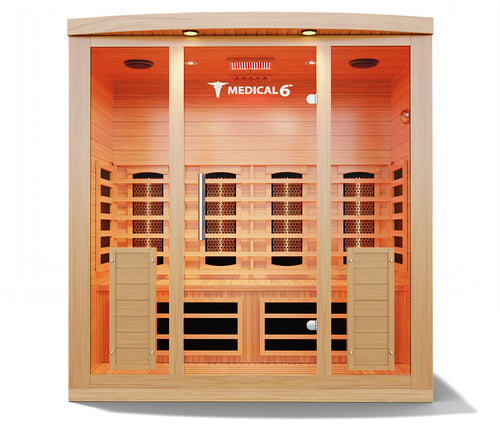
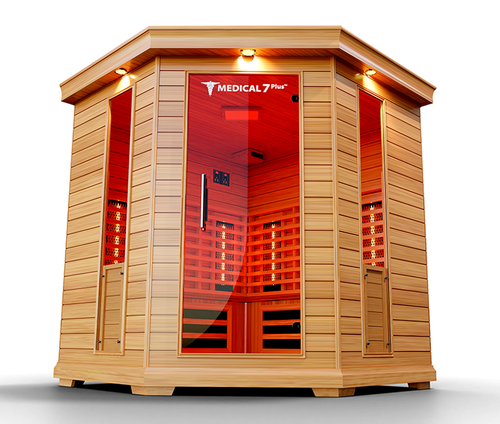
Construction quality separates equipment built for therapeutic outcomes from consumer products designed to meet price points. Medical-grade standards address performance consistency, longevity, and documented capabilities, whether you are considering an indoor sauna or outdoor installation.
Full-Spectrum Infrared Technology
Standard infrared saunas typically use only far-infrared heaters. Medical-grade systems incorporate near, mid, and far-infrared wavelengths that penetrate tissue to varying depths. Near-infrared supports surface-level skin health and wound healing. Mid-infrared improves circulation and muscle oxygenation. Far-infrared generates core temperature elevation for cardiovascular conditioning and deep-tissue effects.
Hybrid Heat Capabilities
We pioneered hybrid systems combining infrared heaters with traditional sauna capability. This allows users to switch between dry infrared sessions for gentle recovery days and high-temperature steam protocols for intense contrast therapy work. Single-heat saunas limit flexibility across different recovery needs. Take a look at our indoor traditional sauna collection to see how this hybrid approach translates into purpose-built product configurations.
Superior Construction And Durability
Medical-grade models use natural hemlock wood selected for density, grain consistency, and moisture resistance. Joints are handcrafted rather than mass-produced with simplified assembly hardware. Advanced insulation systems maintain temperature stability without excessive energy consumption. These construction standards ensure decades of consistent performance rather than 5-7 year replacement cycles common with consumer models.
Clinical-Grade Temperature Control
Precise temperature regulation matters for therapeutic protocols. Medical-grade controllers maintain temperature within 2-3 degrees of target settings throughout sessions. Consumer models can fluctuate 10-15 degrees, which reduces protocol effectiveness. Accurate temperature control becomes critical for cardiovascular conditioning and for timing contrast therapy. Review traditional sauna temperature benchmarks to help clarify why tight precision at every phase of a session is worth prioritizing.
Long-term Performance Reliability
Medical-grade certification involves durability testing, component redundancy, and serviceability design. Heater elements, control systems, and structural components are engineered for repair rather than replacement. This approach reduces long-term ownership costs and ensures consistent performance across years of regular use rather than gradual degradation that forces premature replacement.
Sizing And Space Considerations For 4-Person Saunas
Proper installation requires attention to structural, electrical, and ventilation factors that affect both performance and safety. A 4-person sauna represents significant infrastructure, not portable equipment.
Indoor Installation Requirements
Interior installations require 60-75 square feet of floor space and a minimum ceiling height of 6.5 feet. The foundation must support 800-1200 pounds of total weight, including structure, occupants, and equipment. Subfloor should be level, moisture-resistant, and able to handle temperature variations without warping. Proximity to electrical panels reduces installation complexity and cost.
Outdoor Placement Options
Outdoor 4-person units require weatherproof construction, proper drainage, and a stable foundation. Concrete pads or reinforced deck structures prevent settling and maintain door alignment. Placement should consider privacy, accessibility during winter conditions, and electrical conduit routing from the main service. Weather-resistant materials, such as treated hemlock and sealed joints, prevent moisture intrusion and structural degradation.
Electrical And Ventilation Needs
Most 4 person sauna models require 240V/40-60 amp dedicated circuits installed by licensed electricians. Infrared units typically draw less power than traditional steam systems but still need proper circuit sizing and breaker protection. Ventilation requirements vary by model. Infrared systems need minimal air exchange, while hybrid units require active ventilation for steam protocols and moisture management.
Room Layout And Access
Door swing clearance, bench positioning, and internal layout affect usability. Entry should accommodate wheelchair accessibility if needed. Interior bench configuration determines whether users can lie down, and ceiling height affects standing comfort. Consider sight lines from entry points if privacy matters, and plan storage for towels, water, and timing equipment within convenient reach.
Custom Configuration Solutions
Standard models work for most installations, but custom configurations address unique architectural constraints, aesthetic preferences, or specialized therapeutic requirements. We build custom 4-person units for basement installations with low ceilings, outdoor placements requiring specific weatherproofing, or commercial facilities needing ADA compliance and specific finish schedules.
Selecting The Right Features For Your Goals
Feature selection should align with specific therapeutic objectives rather than generic wellness concepts. Different heat technologies, control systems, and configuration options support distinct health outcomes.
Importance Of Full Spectrum Infrared Technology
Full-spectrum infrared capability matters if you need targeted tissue penetration at specific wavelengths. Near-infrared supports skin health and surface healing. Mid-infrared improves circulation without excessive core temperature elevation. Far-infrared radiation induces cardiovascular conditioning effects through deep-tissue heating. Single-spectrum systems limit therapeutic flexibility.
Why Hybrid Heat Technology Matters
Hybrid heat technology becomes essential for contrast therapy protocols. The ability to switch between gentle infrared recovery sessions and high-temperature steam exposure supports varied training phases. Athletes preparing for competition use different protocols than those in active recovery periods. Hybrid capability provides that flexibility without requiring multiple installations. Our sauna usage guide walks through how to structure sessions using both heat modes for specific performance and recovery goals.
Role Of Chromotherapy Lighting Systems
Chromotherapy lighting systems offer additional sensory input during sessions. While not medically critical, strategic light wavelengths can support relaxation responses and enhance session experience. Red wavelengths may support circulation, while blue tones can create a calming effect. These additions provide value for users interested in comprehensive recovery environments.
Audio And Entertainment Preferences
Audio systems and entertainment integration depend on personal preference. Some users benefit from meditation guidance or music during sessions, while others prefer silence for mental processing. Medical-grade installations can accommodate both approaches with sealed speaker systems designed for high-temperature environments. Consider your actual usage patterns rather than installing features you won't use.
Importance Of Precise Temperature Control
Temperature control precision matters more than most buyers realize. Clinical-grade controllers maintaining tight temperature bands support consistent physiological responses. Budget systems with wide temperature fluctuations disrupt adaptation and reduce protocol effectiveness. Invest in accurate control systems if you're using protocols that require precise temperature management.
Maintenance And Care For Lasting Performance
Medical-grade equipment requires systematic maintenance to preserve performance over decades. Maintenance isn't complicated, but it demands consistency and attention to detail.
Daily Cleaning Protocols
Wipe interior surfaces with a clean towel after each use to remove sweat and body oils. Leave doors open for 15-20 minutes to allow moisture evaporation and prevent mildew formation. Vacuum floor areas weekly to remove dust and debris that accumulates through regular use. These simple habits prevent 90% of common maintenance problems.
Seasonal Maintenance Schedules
Inspect wood surfaces quarterly for signs of warping, splitting, or finish degradation. Check electrical connections and heater elements for corrosion or loose mounting. Test door seals and weather stripping, replacing components showing wear before they affect temperature control. Outdoor units need additional inspection of weatherproofing systems and drainage functionality.
Component Inspection And Care
Infrared heater elements should be checked annually for consistent output and physical damage. Control systems need software updates if applicable and verification of accurate temperature readings against independent thermometers. Ventilation fans require lubrication and cleaning to maintain proper airflow. These component-level checks identify small problems before they become expensive repairs.
Water System Management
Hybrid units using steam generation need regular water system maintenance. Descale steam generators according to water hardness levels in your area. Inspect water lines for mineral buildup and leaks. Replace filters as recommended to prevent sediment accumulation that reduces efficiency and damages heating elements. Water quality directly affects steam system longevity.
Professional Support Resources
We provide 18 hours of daily support because recovery routines don't follow business hours. Technical guidance helps troubleshoot issues, schedule preventive maintenance, and coordinate repairs when needed. Our support team understands the requirements for medical-grade equipment and provides tailored recommendations based on your installation and usage patterns.
Pricing, Investment, And ROI
A medical-grade 4-person sauna represents a significant upfront investment balanced against decades of use and documented health benefits. Cost evaluation should consider total ownership rather than just purchase price.
Entry Level vs Medical Grade Pricing
Entry-level consumer 4-person models start around $3,000-5,000 but typically require replacement within 5-7 years due to component failure and construction degradation. Medical-grade systems begin at $8,000-12,000 for full-spectrum infrared models, with hybrid units ranging $12,000-18,000 depending on features and customization. Custom installations can exceed $20,000 for specialized requirements. Browse our best home sauna options to compare models across budget ranges with full feature specifications.
Installation Costs And Considerations
Installation costs range from $1,500 to $ 3,500 for electrical work, foundation preparation, and professional assembly. Outdoor installations requiring weatherproof enclosures or extensive electrical runs further increase costs. Budget for professional installation rather than attempting DIY work that may void warranties or create safety issues.
Monthly Operating Costs
Operating costs depend on usage frequency and local electricity rates. Infrared systems typically cost $15-30 per month for regular use, while hybrid units using steam protocols may cost $40-60 per month. These costs are significantly lower than gym memberships, spa visits, or other recovery treatments that provide similar therapeutic benefits.
Evaluating Health And Wellness Returns
Health outcome value is personal but measurable. Users report reduced medical visits, improved sleep quality, faster recovery, enabling more consistent training, and better stress management. Quantifying these benefits against monthly ownership costs often reveals positive returns within 2-3 years for committed users maintaining regular protocols. Read through our customer reviews to see how users across different goals and usage patterns describe those returns in their own words.
Resale Value And Long Term Worth
Resale value for medical-grade installations remains strong because serious buyers recognize the quality of the equipment. Properly maintained units retain 50-70% of purchase price after 10 years, comparable to other permanent home improvements. Consumer-grade models lose value rapidly and often become disposal liabilities rather than resale assets.
Sources:
- Beever, Richard. (2009). Far-infrared saunas for treatment of cardiovascular risk factors Summary of published evidence. Canadian family physician Médecin de famille canadien. 55. 691-6.
- Shui S, Wang X, Chiang JY, Zheng L. Far-infrared therapy for cardiovascular, autoimmune, and other chronic health problems: A systematic review. Exp Biol Med (Maywood). 2015 Oct;240(10):1257-65. doi: 10.1177/1535370215573391. Epub 2015 Feb 25. Retraction in: Exp Biol Med (Maywood). 2020 Aug;245(14):NP1. doi: 10.1177/1535370220940656. PMID: 25716016; PMCID: PMC4935255.
- Podstawski R, Borysławski K, Józefacka NM, Snarska J, Hinca B, Biernat E, Podstawska A. The influence of extreme thermal stress on the physiological and psychological characteristics of young women who sporadically use the sauna: practical implications for the safe use of the sauna. Front Public Health. 2024 Jan 26;11:1303804. doi: 10.3389/fpubh.2023.1303804. PMID: 38344040; PMCID: PMC10853428.